03 May 2007

DevonIT and IBM

DevonIt often shows up as an advertiser on this Blog. Received this press release in my email Inbox today from them and thought it appropriate to give them some space. I use one of their thin client devices, 6020A , as a testing device on my test bench. Works good.

2007 Press Releases

IBM Unveils New Blade "Eco" System for Next-Generation Client Computing

Blade.org Partner Devon IT Invests $8M in R&D with IBM BladeCenter;
New Solution Eliminates 90 Percent of the Energy Consumed by Desk Side Computing

ST.LOUIS, MO., PartnerWorld 2007 - May 1, 2007 - Today at its PartnerWorld 2007 Conference, IBM (NYSE: IBM) previewed the latest in next generation client computing with the new BladeCenter "Workstation Blade", developed in collaboration with Blade.org partner Devon IT. The new offering will include the new IBM Workstation Blade and its associated "eco" system of connection broker software and desktop device from Devon IT, designed to help customers host workstation environments remotely to significantly reduce energy consumption in the workplace.

The new blade-based solution from IBM and Devon IT will be ideal for traders in financial services and CAD design engineers, who find themselves traditionally surrounded by several workstations generating heat and noise. By moving desktop and applications to blade servers designed to more efficiently dissipate heat, and utilizing a desktop device with no spinning hard drives for storage or fans needed to dissipate heat, the energy consumed desk side can be reduced by up to 90 percent. While a typical workstation can consume up to 300 watts, a desktop device from Devon IT consumes merely 15 watts, the equivalent of the amount of energy consumed to run an electric shaver.

"Prior to the desktop PC boom 25 years ago, desktop client computing was hosted by networks of connected servers. By the 1990s PCs became connected and played a driving force in server and networking advancements," said Doug Balog, vice president and business line executive, IBM BladeCenter. "Today, new advances in servers and networking is helping to enable efficient hosting of complex client environments on servers allowing centralized management and security under the control of the datacenter. With its highly efficient design, IBM BladeCenter has arrived as the ideal platform for server-hosted client computing."

The new solution will also help improve business security and privacy by moving desktop assets and corporate IP back into the data center. Business productivity can be realized by providing users with a more flexible environment with free seating, and a robust infrastructure that enables access at ranges up to 2500 miles, comparable to the distance between San Francisco and New York. Lower management and traditional desk side support costs can also dramatically reduce IT operating costs.

The IBM Workstation Blade will also offer unique, breakthrough and leading edge remote display and graphics acceleration. Unlike competitive offerings, IBM's Workstation Blade relies on hardware compression techniques in the render and transfer of I/O and graphics from blade server to desktop device, drastically improving the quality of image delivered and the performance and speed of the process. In addition, end users will be able to use a full array of USB devices, beneficial for less demanding graphics applications. The IBM Workstation Blade will extend the infrastructure integration capabilities of IBM's family of BladeCenter systems, and will complement IBM's Virtual Client Solution, introduced in 2005. IBM can offer customers a wide range of 'remote desktop' computing options. These include, publishing server based applications, offering a server based Virtual Client Solution, as well as the ability to offer a high end workstation class blade computing environment.

Investing in the Promise of IBM BladeCenter
When IBM opened up the specifications to IBM BladeCenter in 2004, it took a unique stance in the industry enabling entrepreneurial innovation to drive the development of blade-based computing. Since then customers have benefited from the collaborative approach that has kept IBM at the forefront of blade system design and solution innovation.

Devon IT began its collaborative relationship with IBM in 2005 and has since invested over $8 million dollars in research and development with IBM to drive innovation in next generation client computing.

"IBM is clearly the leader in Blade computing technologies, and we are proud to offer our technology as part of the Workstation Blade initiative," said Joe Makoid, president, Devon IT. "As a founding member of Blade.org, Devon IT has collaborated with industry leaders like IBM to help establish a framework for alternative desktop computing methods. This has given Devon IT the opportunity to drive our business and embark on future server-hosted desktop projects with IBM that will continue to reduce desktop computing costs for enterprise IT customers."

Devon IT recently launched its Server Desktop Solution Center at its headquarters in King of Prussia, Pennsylvania. The Server Desktop Solution Center is the industry's first facility where companies can bring their own servers - either physically or virtually - to test and implement server-centric computing environments. Customers can test Devon IT desktop devices, IBM BladeCenter systems and servers, software from Citrix, and virtualization solutions from VMware, along with products from other server-based computing companies. Industry experts from Devon IT and CentriServ also offer seminars, classes, and comprehensive solution and integration services to help companies understand and implement server-centric computing environments.

About Devon IT
Devon IT is an information technology company that focuses on offering desktop devices, alternative desktop computing methods, and ultra-secure remote access solutions that provide enterprise customers with greater security, enhanced manageability, improved reliability, and lower costs. Devon IT develops products which support IBM's Hosted Client Infrastructure and Blade Computing ecosystem and is a founding member of Blade.org. More information is available at www.devonit.com

About Blade.org
Blade.org is a collaborative organization and developer community focused on accelerating the development and adoption of blade server solutions. The organization provides leadership to the blade market and fosters a thriving industry ecosystem focused on delivering valuable solutions to blade computing customers.

For more information about IBM BladeCenter, please visit www.ibm.com/bladecenter.


Media Contacts

Vineeta Durani
IBM Media Relations
415-545-2350
vdurani@us.ibm.com
Paul Mancini
Devon IT
610-757-4108
pmancini@devonit.com

Until the next post,

Steve

02 May 2007

WiMax Laptop Card Approved by (US) FCC

There are some elements of Server Based Computing that are common to the industry at large. Connectivity being one of them. Have been following Clearwire since it entered the Jacksonville, FL market several years ago. Notice in the last paragraph of this press release a reference to 2 to 4 kilometers. The distance is estimating a "None Line of Sight" distance. With Wifi this distance is measured in meters . How many meters are there in a kilometer? It is that big of a change!

Regulators have approved the first WiMax wireless broadband laptop PC card to be offered by Clearwire.

Dan Nystedt, IDG News Service

Tuesday, May 01, 2007 8:00 PM PDT

Regulators have approved the first WiMax wireless broadband laptop PC card to be offered by Clearwire Corp., and it should be available to users later this year, the company said Tuesday.

The U.S. Federal Communications Commission approved a WiMax laptop PC card that fits into a standard Type II laptop card slot and can be used with the Windows Vista and XP operating systems, Clearwire said in a statement. The card works on Clearwire's WiMax network, which has been built with Motorola Inc. wi4 Expedience wireless networking equipment.

Approval of the high performance WiMax card should propel the use of WiMax by broadening the potential base of customers, Clearwire said in a statement.

Laptop PC users were instrumental in increasing the popularity of Wi-Fi, which WiMax aims to replace with its speedier wireless Internet service and wider ranging access. Wi-Fi became popular because it freed people from sitting at home connected to the Internet by wire, and instead allowed them to sip coffee at Starbucks while reading e-mails wirelessly on their laptop PCs.

Clearwire, of Kirkland, Washington, expects the WiMax laptop PC cards to be available in the second half of this year. The company currently offers broadband wireless services in the U.S. and Europe. Its subscribers rose to 206,000 as of the end of last year, from just 1,000 on Sep. 30, 2004, it said when it filed to list on the Nasdaq Stock Market LLC in February. Its subscriber base has grown despite wireline alternatives for users, including broadband cable modems and DSL (digital subscriber line) Internet service.

As of the end of last year, Clearwire services were available to 9.6 million people, including 8.6 million throughout the U.S., and one million in Brussels, Belgium and Dublin, Ireland, the company said.

WiMax base stations can send broadband Internet signals to far greater distances than Wi-Fi technology. Although estimates vary on how far WiMax signals can go, in densely populated cities, where users are not likely to be positioned within sight of access points, the distance should be between 2 km and 4 km.

Until the next post,

Steve

30 April 2007

Made in India PC for just about $ 100

In a previous post i posed the question could China or India spur the next wave of Server Based Computing. It looks like India may the first. Novatium announced an ambitious plan to provide as a subscription service its Net PC to 10 million users over the next 5 years. Combine this announcement with India government planning to make broadband widely available and you have an environment for SBC growth. The subscription service is targeted at 400 rupees (about 10 USD) per month. Below is the release from The Hindu News Update Service.

New Delhi, April 29 (PTI): While global computing giants like IBM and AMD are yet to give shape to their ambitious plans for a computer that costs 100 dollars or less, an Indian company has already set its eyes on 10 million potential customers with its up-and-running PC priced at Rs 4,500 only.

The machine, launched by Chennai-based Novatium Solutions in 2004, costs a little over 100 dollars as of today in the US currency, thanks to the depreciation in the greenback, but it was priced at less than 100 dollars till a few months back.

Novatium is targeting 10 million users in the next five years for this innovative product, company CEO Alok Singh told PTI from Chennai.

The company has already started a successful commercial pilot for its NetPC computer in Chennai, he said.

"Since our trial was commercial in nature, we plan to stick to it. Going forward, we plan to expand into 6-7 big cities in the next year. Some of our immediate plans are going into two new cities in this quarter and two more in the next quarter," Singh said.

Novatium was co-founded by US-based Analog Devices chairman Ray Stata, Netcore Solutions managing director Rajesh Jain and professor Ashok Jhunjhunwala of IIT Madras.

The company's NetPC works on a "thin client" concept. This is a small box and does not contain any software or application. It is linked to a central server, which hosts all applications.

"Network PC (NetPC) costs around 100 dollars (less than Rs 4,400) and along with a monthly subscription of around Rs 400, it provides you with internet connection and almost everything like authentic softwares, applications etc," Singh said.

"The use of mobile chips forms the basis of our low-cost computer model," he added.

NetPC is probably one of the very few successful attempts when a company has been able to replicate a business model that combines philanthropy with sound economic sense.

US-based business software giant Oracle Corporation's founder Larry Ellison had mooted the idea of a low-cost network computer way back in 1990, while Nicholas Negroponte, the former director of Massachusetts Institute of Technology Media Labs, has been long outlining designs for a sub-100 dollar computer.

In 2005, chip maker AMD also ventured out in the low-cost computing space and similarly, while Intel is also investigating ways to make low-cost PCs available in Eastern Europe, India and other developing areas.

When Negroponte, now heading the ambitious non-profit global project One Laptop Per Child, first unveiled his 100 dollar computer model in 2005, the computing legend Bill Gates scoffed it for not being a "decent machine."

Things have changed a lot since then and when Negroponte revealed the machine finally last week, it turned out to be running on Microsoft's operating system, Windows XP Starter Edition.

However, the cost of the product coming out from One Laptop Per Child, designed for school children in developing countries, has been put at 175 dollars -- which is quite higher than that of the Indian NetPC product.

According to experts, the price of softwares especially operating systems and expensive add-ons ramps up the price of desktop computers. This has a domino effect and when it finally arrives to the end-user it costs at least 300-400 dollars (Rs 14,000 -17,500).

"While TV and mobile phone penetration has gone up by leaps and bounds, computing is nowhere. A way to increase computer users in the country could be by making computers at a less cost and then offering the same at a lesser price," Singh said.

Novatium devices support all the common network operating systems, namely, Windows 2000, Windows 2003, Solaris 9 and 10, Red Hat Linux and other Linux distributions.

"The company has tied-up with various partners and is planning to ramp up operations soon," Singh said.

"Due to our business-model we had to tie up with partners that take care of content applications, server applications, he said, adding that these partners provide critical links for our personal computer network.

"The challenge for my company is to bring in new users and with the kind of targets we have set, we are confident more and more people will use NetPC," Singh said.


Will keep you posted as to who are the partners. The news release does not mention any of them by name.

Until the next post,

Steve

29 April 2007

Microsoft Longhorn Standard Server Beta 3

Downloaded Microsoft Longhorn Standard Server Beta 3 for 64 and 32 this weekend. Both installed flawlessly. Looks like they have keep much of what is in Terminal Server 2003 that worked well and added a few new items. Things like load balancing/management/fault tolerance, application publishing, web access and support for some client plug and play devices.

The caveat with load management is that the servers must be in a domain. A footnote suggests that 2-5 or 6 servers maybe the most you would want in the load managed farm. Or maybe the upper limit is not known and Microsoft is recommending that for test purposes you might not exceed a small number.

However, I did notice very quickly that my Linux based thin clients would not connect to either the 64 or 32 bit version of TS. Maybe Rdesktop will need a little tweaking?

As a lark loaded Skype as an application. Installed the Vista desktop experience and enabled audio on the client. Everything works except for the microphone. Get a nasty error message that a sound recording device is not installed.

Here is the link if you want to get a copy of Longhorn Server. The license is good for a year.

http://www.microsoft.com/windowsserver/longhorn/audsel.mspx

Until the next post,

Steve

23 April 2007

US FFA may switch to a Google Dell Linux SBC solution?

Read with interest that Microsoft will allow Vista to become a hosted application for those with SA. Also read that Dell will continue offering XP on some products. But while sifting through some old searches, came across this 6 week old article in Information Week dated March 6.

"FAA (US Federal Aviation Administration) May Ditch Microsoft's Windows Vista And Office For Google And Linux Combo"

Microsoft has for years had the ability to publish a product like Google Applications For Your Domain. However, it appears to me they find it difficult to “eat their own young.” I suspect that internally they have battled with idea that SBC and thin clients replacing some Personal Computers is not in the best interest of Microsoft. A PC on every desk may have once been the goal but now i believe it is the access to the power of computing when and where the customer wants it. The FFA may have just said “Google Dell 123, turn right 110, climb and maintain flight level...” and others are insisting this flying stuff is just fantasy and will never ever take off.


FAA chief information officer David Bowen said he's taking a close look at the Premier Edition of Google Apps as he mulls replacements for the agency's Windows XP-based desktop computers and laptops.
March is coming in like a lion for Microsoft's public sector business. Days after InformationWeek reported that the Department of Transportation has placed a moratorium on upgrades to Vista, Office 2007, and Internet Explorer 7, the top technology official at the Federal Aviation Administration revealed that he is considering a permanent ban on the Microsoft in favor of a combination of Google's new online business applications running on Linux-based hardware.

In an interview, FAA chief information officer David Bowen said he's taking a close look at the Premier Edition of Google Apps as he mulls replacements for the agency's Windows XP-based desktop computers and laptops. Bowen cited several reasons why he finds Apps attractive. "It's a different sort of computing strategy," he said. "It takes the desktop out of the way so you're running a very thin client. From a security and management standpoint that would have some advantages."

Google Apps Premier Edition last month at a price of $50 per user, per year. It features online e-mail, calendaring, messaging, and talk applications, as well as a word and a spreadsheet . The launch followed Google's introduction of a similar suite aimed at consumers in August. The new Premier Edition, however, offers enhancements, including 24x7 support, aimed squarely at corporate and government environments.

Bowen said he's in talks with the aviation safety agency's main hardware supplier, Dell Computer, to determine if it could deliver Linux-based computers capable of accessing Google Apps through a non-Microsoft browser once the FAA's XP-based computers pass their shelf life. "We have discussions going on with Dell," Bowen said. "We're trying to figure out what our roadmap will be after we're no longer able to acquire Windows XP."

Bowen, however, said he has not definitely ruled out an FAA-wide upgrade to and related software -- if Microsoft can satisfy his concerns over compatibility with the agency's existing applications and demonstrate why such a move would make financial sense given Google Apps's low price. "We have a trip to Microsoft scheduled for later this month," said Bowen.

Like the Department of Transportation, the FAA -- technically under DOT but managed separately -- has its own moratorium in place on upgrades to Windows Vista, Internet Explorer 7, and 2007. Among other things, Bowen said the FAA's copies of IBM's software don't work properly on test PCs running Windows Vista.

Bowen's compatibility concerns, combined with the potential cost of upgrading the FAA's 45,000 workers to Microsoft's next-generation desktop environment, could make the moratorium permanent. "We're considering the cost to deploy [Windows Vista] in our organization. But when you consider the incompatibilities, and the fact that we haven't seen much in the way of documented business value, we felt that we needed to do a lot more study," said Bowen.

Because of Google Apps' sudden entry into the desktop productivity market, what once would have been a routine decision at the FAA to eventually upgrade to Microsoft's latest software is now firmly up in the air. With similar debates doubtless playing out at other government agencies -- and in the private sector -- Microsoft is going to have to work a lot harder than in past years convincing customers to follow its well worn path of new releases and follow-on patches.

Until the next post,

Steve


19 April 2007

Mobile SBC Clients 2008 and beyond.

Have managed a terminal server using a RDP client on a cell phone and worked. Not well, but it worked. That is why I am easily side tracked by convergent devices and UMPC form factors. Although the death of the UMPC has often been reported, Intel is betting otherwise. Below is a news release from Intel. Not just 40% smaller components but, Wi-Fi AND WiMax included.

Intel Keeps Mobile Engine Humming, Fueled By Silicon Technology Advances
Innovation, Processing Performance and Cooperation Key to Moving Forward Faster

INTEL DEVELOPER FORUM, Beijing, April 18, 2007


Describing the latest trends in mobile computing at the Intel Developer Forum today, Intel Corporation executives said that personalization and content are key drivers behind increased demand for notebook PCs and mobile Internet devices (MIDs).

"The Internet is one of the driving forces in today's PC market and there is a desire for the Internet to be mobile," said David (Dadi) Perlmutter, Intel senior vice president and general manager, Mobility Group. "Intel is serving the market today with notebook PCs, and will expand its reach by adding WiMax to notebooks as well as small form factor MIDs in 2008."

Perlmutter continued by discussing the importance of high-performance processors to enable users to have mobile access to the internet. Intel continues to provide high-performance processors based on innovative silicon technology that delivers energy efficiency and great battery life needed by users on-the-go including the next generation Centrino processor technology "Santa Rosa."

Due in May, Santa Rosa processor technology is comprised of a next-generation Intel® Core™2 Duo processor, the Mobile Intel® 965 Express chipset family, Intel® Next-Gen Wireless-N Network Connection, Intel® 82566MM and 82566MC Gigabit Network Connection, and optional Intel® Turbo memory. Perlmutter demonstrated how Intel Turbo Memory decreases resume time from notebook hibernation, thus increasing productivity and reducing system power consumption.

In the first half of 2008, Santa Rosa will be refreshed with Intel's innovative 45nm Hi-k dual core mobile processor, codenamed "Penryn." Later in 2008, Perlmutter said Intel will deliver "Montevina" processor technology, also with Penryn, for greater performance and energy efficiency. With approximately 40 percent smaller components, Montevina will be ideal for mini- and sub-notebooks, and will include integrated hardware decode for high-definition video.

For the first time, Intel will make its integrated Wi-Fi/WiMAX solution available as an option with Montevina-based notebooks, enabling people to connect to Wi-Fi and WiMAX networks worldwide. Mobile WiMAX provides multi-megabit speed, greater throughput and wider range versus other wireless broadband technologies, which is crucial as consumers increasingly want to access user-generated content, high-definition videos, music, photos and other large data files while on the go.

Redefining Mobility with Innovation, Integration
Anand Chandrasekher, Intel senior vice president and general manager of the Ultra Mobility Group, described the evolution of the personal mobile Internet, outlined changes in Intel's silicon roadmap that will create radical reductions in power requirements and innovative new packaging technology, and disclosed a range of leading industry players Intel is working with to establish the MID and ultra-mobile PC (UMPC) categories.

Chandrasekher introduced the Intel® Ultra Mobile platform 2007 (formerly codenamed "McCaslin") for MIDs and UMPCs and said systems will be available over the summer from Aigo*, Asus*, Fujitsu*, Haier*, HTC* and Samsung*. The Intel Ultra Mobile platform 2007 is based on the Intel processor A100 and A110, the Intel 945GU Express Chipset and the Intel ICH7U I/O Controller Hub.

"Today's environment is primed for a truly personal, mobile Internet experience and the Intel Ultra Mobile platform 2007 combines the flexibility of a PC with the mobility of a handheld device," said Chandrasekher. "But we will not stop here. In 2008, Intel will deliver an entirely new platform based on Intel's 45nm low-power microarchitecture designed from the ground up to let people to carry their personal mobile Internet in their pocket."

Pulling in the schedule by half a year, Chandrasekher said Intel will deliver its next-generation platform for MIDs and UMPCs codenamed "Menlow" in the first half of 2008. While demonstrating the world's first working Menlow-based prototype, he said it will be based on a new 45nm Hi-k low power microarchitecture-based processor, codenamed "Silverthorne," and next-generation chipset, codenamed "Poulsbo."

Chandrasekher also announced the formation of the Mobile Internet Device Innovation Alliance. Together, alliance members will work on engineering challenges, including power management, wireless communications, and software integration, that are associated with delivering the full Internet in ever-smaller MID form factors.

45nm High-k Metal Gate Transistors Technology Leadership
Intel's next-generation processors for the ultra-mobile, mobile, desktop, workstation and server segments will be based on the company's leading 45
nm silicon process technology that uses its revolutionary high-k metal gate transistors.

During his Technology Insight presentation, Intel Senior Fellow Mark Bohr said the company now has working versions of its Silverthorne processor based on its 45nm Hi-k low power microarchitecture for MIDs and UMPCs. Silverthorne joins already working versions of its 45nm Hi-k Intel Core 2 Duo, Core 2 Quad and Intel Xeon family of processors. Today, Intel has more than 15 different 45nm Hi-k product designs in various stages of development, and will have two 45nm manufacturing fabs in production by the end of the year, with four in production by the second half of 2008.

Intel's long-standing research and technology pipeline has led to innovative advances in silicon technology that in turn allow the company to continuously deliver the cost and performance benefits of Moore's Law. In 2003, Intel was the first to introduce strained silicon technology to greatly increase the speed of its transistors on its 90nm process.

Intel is already working on technology for 32nm, 22nm and beyond. Bohr described several options that Intel is researching for future technology generations, including tri-gate transistors, Indium Antimonide quantum well transistors and carbon nanotube interconnects.

View Intel Developer Forum Day 2 news disclosures.

View product information for the Intel® Ultra Mobile Platform 2007 at www.intel.com/products/mid/ultramobile2007.htm

View the complete Intel Developer Forum press kit at http://www.intel.com/pressroom/idf.

About Intel
Intel, the world leader in silicon innovation, develops technologies, products and initiatives to continually advance how people work and live. Additional information about Intel is available at www.intel.com/pressroom.

Intel, Intel Core, Centrino, Xeon and the Intel logo are trademarks or registered trademarks of Intel Corporation or its subsidiaries in the United States and other countries.

15 April 2007

Public Server Based Computing Vendors

This is a list of vendors that are offering a Web based SBC type product. Will post some comments about each one in this space over time. Of course there are links to each one of these vendors in the left column under Public Server Based Computing.

Most likely it is an incomplete list of vendors. If you know of other vendor(s,) please advise us of the URL and we will link to their site.
  • Atlantis Computing
  • Desktop On Demand
  • Desktop Two
  • DoxBoard
  • eDesk Online
  • ESuite
  • eyeOS
  • Fenestela
  • G.ho.st
  • Glide
  • Google Apps For Your Domain
  • Goowy
  • GravityZoo
  • Ironbox
  • Netvibes
  • Oos
  • Orca Desktop
  • Protopage
  • Virtual-OS
  • WebtopOS
  • Xcerion
  • XinDesk
  • YouOS
  • Zoho

Until the next post,

Steve

02 April 2007

Public Server Based Computing Requirements

This is the first draft of Public Server Based Computing requirements.

  • Host applications that meets some of the client's Server Based Computing requirements.
  • Permit other vendors SBC applications to be presented with the host's own products.
  • Transparency to the user.
  • Storage server side and/or client side.
  • Allow users' locally hosted applications (home/office) the be presented to the user when operating remotely.
  • Choose the connectivity.
  • Print. And it should be where i want it to print!
  • For bonus points, work offline and collaboration.

Please note, I did not mention television, radio, music, or phone service. Nor did i specify word processing, spreadsheets, or even email. Let the market specify what applications are offered.


Also, omitted any reference to an OS, web or otherwise. Let hair splitting technocrats discuss what is an OS and what is not. Almost 6 billion people on this planet do not care what it is if it works.


And the first tier level of operation should be free!


Reserve the right to change any requirement, for any reason, anytime. Think of the requirements as "in Beta." Has worked well for one company.


Until the next post,


Steve

01 April 2007

Public Server Based Computing ready for the prime time?

It is great to be back on line. Decided to try a public Server Based Computing solution to replace my standard desktop. Lost my dot com address redirection. With more than 2 dozen emails back and forth, two open tickets and assigned a technician (that never contacted me) over a 5 week period with no solution, decided to move the registration and host to another company. I now have scars from the experience. My enthusiasm for public SBC is not daunted but tempered with the very real difficulties of providing a strong and solid solution to the global public SBC space.


The trial was very good except for the inability to redirect this Blogger site to SBCList.com. The great disappointment was the realization that the support staff for the product never became proactive. Not once did they initiate a follow up to determine if the solution they provided was successful. Moving the registration and hosting to another company reduces the value of their Server Based Computing package to something that i can get for free elsewhere.


Think i will research the potential Public SBC providers. Have listed several of them in the side bar but will add more to this blog over the next several posts. There are perils and pitfalls a plenty for Public SBC. But one day, one provider will hit on all the required points and set the baseline. I suspect it is sooner than later.


Every pilot knows the minimum equipment list for the plane and the proposed flight before taking off in flight. What are the minimum requirements for a Public SBC product?


Until the next post,

Steve

10 February 2007

Skype. Sever Based Computing? Or Not?

It is 04:54 on a Monday and my Skype line is ringing. It is Raul. “ My Skype phone (Belkin WiFi) works.”. He knows I keep vampire hours and noticed I was listed as Online. “I am at the airport and just turned on the phone, and it connected to the Internet. And Internet access at the airport is free! Our plane does not leave for 2 hours and thought we could test the connection.” His wife likes to get to the airport early. It works. Good night. Have a safe flight.

This event was actually the culmination point of several events. Three weeks before i received an email from a friend informing me that he was heading to Dhaka that afternoon and would not be back for a month or more. The previous night he had bought a thumb drive with Skype already installed and suggested that we try using it to communicate between here and Bangladesh. Why not.


Downloaded Skype to a Ubuntu 6.10 based PC. Because I keep vampire hours, already was using a headset for audio and it had a microphone attached. Just had to plug in the microphone. Without reading a manual, worked through the installation, registration, and setup. Skype has a built in test call number that confirms if you have your settings correct. It did. But who do i call? It will be days before my friend arrives and is setup in Dhaka. Just have to wait.


Or not. The next day i share with Raul the story about Dhaka, thumb drive, and Skype. He informs me that he looked for me in the Skype search users database a few days earlier and could not find me. Thought for sure i would have long ago signed up. Not so. Had read about Skype but was just not that motivated to download and try it. The thought that it was FREE and could be used as a thumb drive application anywhere in the world was enough of a push to get me interested.


We exchanged Skype information and connected computer to computer later that day. He had already attached a web camera and we were able to have half of a video conference. My interest grows. Three days later my friend's Skype name appears as Online. Click on the big green button to call him and the application tells me it is ringing him. He answers. Nothing. “Are you there? Can you here me now?” Nothing. Then an IM box appears and he types in that he is having trouble with the equipment in the hotel business center. Maybe i can ring him on the local cell phone he was given on arrival in country. I note the number. Dial it. It works. Not FREE as computer to computer, but none the less inexpensive if you charge by distance. More interest.


Skype is a peer to peer based system. Server Based Computing people might raise their noses and cry foul, but when someone can make the complex work simple, be warned. In the past six weeks i have watched the Skype on line user count almost double to over 9,000,000 users on line at the same time. If you assume that only about 1 out of 10 is Online at any one time (or less), that means they have a very large database of early adapters.


Skype is not a pure P2P network and maintains a central repository of account information and user history. Centralized servers are used to authenticate users to the P2P network. Then “super nodes” are used to connect user to user. With the exception of some APIs, the system is closed. But that is of less interest to me than the applications that are available including remote access (and control) of another computer, shared applications, and video conferencing.


My Belkin WiFi has a display, MAC address, its own OS, and the ability to connect to an authentication server that is able to redirect me to another computer that has a role other than P2P. Could it become a SBC type system. Maybe or most likely one with a dual role. Skype has millions (100 million or more?) of registered users and a foot in their door. Skype already has a market place for value added vendors to display their products. Maybe 100,000,000 users? Nice.


Since that first test on Ubuntu, have since tested Skype with Windows XP sp2, Windows Vista Ultimate 64 and yes, my very on own Belkin WiFi. My cell phone has been reassigned to emergency services only. Click here to watch a video or two from the Skype site.


Until the next post,


Steve

+44 20 8816 8614 London

+852 8121 4210 Hong Kong

+1 979 399 4881 Dime Box


FYI: Even though a Skype banner appears at the top of this blog and a picture of Belkin phone is included, have not been contacted by either party. Did find a bug in the Linux version and forwarded the bug to Skype. For me it is not a problem, for others it could be significant.

30 January 2007

US70x Series UMPC

Have been waiting for a vendor that could deliver a form factor that was just the right size. But who is the vendor? Anyone know? See update listed below!

Found these photos on TabletPC'Corner.

US700W Tablet

OS - Microsoft Windows Vista Business/Ultimate
Processor - Intel Celeron M 1.06G MHz
Display - 7", TFT-LCD,WVGA
LCD - 800 x 480 Pixels
Memory -- 1G MB SODIMM
HD-1.8"20G/30G/40G/60G
Bluetooth-V2.0+EDR
Wireless LAN-802.11b/g
USB 2.0 *1
VGA OUT *1
WebCam 1.3M
Memory Expansion- SD/MMC
Battery- L-Polymer 1,800 Mah(IN) /3,400 Mah(OUT)
Size-198 (L) x 114 (W) x 20.5 (H) mm (Max.)
Weight-560g


US701 High resolution Tablet with GPS, webcam, +still cam

OS - Microsoft Windows Vista Business/Ultimate
Processor - Intel Celeron M 1.06G MHz
LCD - 1024 x 600 Pixels
Memory -- 1G MB SODIMM
HD-1.8"20G/30G/40G/60G
Bluetooth-V2.0+EDR
Wireless LAN-802.11b/g
USB 2.0
*1VGA OUT
*1WebCam 1.3M
Camera 2.0M
GPS SIRF III
Memory Expansion- SD/MMC
Battery- L-Polymer 1,800 Mah(IN) /3,400 Mah(OUT)
Size-198 (L) x 118 (W) x 20.5 (H) mm (Max.)
Weight-600g


US702 High resolution Convertible

OS - Microsoft Windows Vista Business/Ultimate
Processor - Intel Celeron M 1.06G MHz
LCD - 1024 x 600 Pixels
Memory -- 1G MB SODIMM
HD-1.8"20G/30G/40G/60G
Bluetooth-V2.0+EDR
Wireless LAN-802g/b
USB 2.0
*1VGA OUT
*1WebCam 1.3M
Keyboard
Memory Expansion- SD/MMC or CF
Battery- L-Polymer 1,800 Mah(IN) /3,400 Mah(OUT)/5,400 Mah(OUT)
Size-198 (L) x 125 (W) x 26 (H) mm (Max.)
Weight-650g


Update!

With some help from a very good researcher, the manufacturer's name is Ya Hsin Industrial Company.,Ltd.


The KIDC is the acronym for Kreation (Creation) Ideal Design Center and it has been reported that it is part of Ya Hsin.

Rumors and speculation are pointing to Microsoft as the R&D sponsor. Can anyone confirm or deny?

Until the next post,


Steve

31 December 2006

Chip PC Technologies and Dell Computer

Was curious if Ardence was partnered with Dell, was Dell also partnered with other thin clients. Dell did have a thin client of their own at one time. Do they still offer their e200? No listing.

But Wyse and Neoware are listed when searching on Dell's web site. Three of Neowares' Capio products are available from Dell with financing. The Wyse and Neoware listings where not what caught me eye.

Chip PC Technologies is also listed with their EX (pictured left) and EFI products. Their Jack PC (pictured right) is also listed in a separate PDF on Dells web site. Here is the link Technologies listing on Dell's web site. Dell is listed as Chip PC Technologies North American distributor. to PC


Contacts listed:

Frank Bernard
Chip PC Inc. - USA
frankb@chippc.com
Mobile: 512-699-0847
Office: 877-9244772


Jim Lathan - ASG Client Technologist
Dell Inc.
Specializing in Client Systems Management and Thin Computing Solutions
James_Lathan@dell.com
Mobile: 803-420-3865
Office: 803-438-8442


Dell also lists Century Software for Thin PC clients. Here is the link to Dell's web listing Tiny Term and PIXIL Thin PC clients as part of the "Dell Remote Computing Solution".


Until the next post,


Steve

25 December 2006

Citrix to acquire Ardence

From eWeek:

Citrix Snags Embedded OS Provider Ardence
By Paula Musich
December 20, 2006

"Citrix Systems on Dec. 20 will put another piece of its Dynamic Desktop Initiative into place when it announces its planned acquisition of Ardence.

Ardence, a privately held company that markets embedded real-time operating system software and a software streaming platform for Windows and Linux, brings to the table real-time provisioning management for operating systems.

The Ardence product line offers several different opportunities for Citrix, although the primary focus will be to extend the DDI effort, according to Mike Cristinziano, vice president of strategic development at Citrix in Fort Lauderdale, Fla."
Ardence is also partnered with Dell. If trusts are transitive, does this make Citrix a Dell partner or is Dell a partner with Citrix?

Ardence Dell™ SmartClient

The Ardence Dell™ SmartClient solution increases desktop security, reliability, and manageability – and reduces total cost of ownership – by delivering Microsoft Windows XP Pro and all applications on-demand from centralized servers.

Each Ardence Dell™ SmartClient has a "virtual disk" that resides on a network server and when a SmartClient is booted-up, the operating system and applications are streamed to the desktop on-demand via the Ardence Software-Streaming Platform. Local processing and the operation of peripherals takes place on highly dependable Dell hardware.
How many more partnerships may be forth coming?

Until the next post,

Steve

New Moon, SCO, Sun, Propalms, and now Jenna Lane, Inc.

From Marketwire.com:

Jenna Lane, Inc. Closes 2006 With Merger of Advancing Software Corporation


NORTH YORKSHIRE, UK -- (MARKET WIRE) -- December 21, 2006 -- Jenna Lane, Inc. (PINKSHEETS: JLNY) is pleased to announce the Company impressively closed 2006 by merging with Propalms Ltd, an advancing software corporation based in the United Kingdom. Propalms, Ltd. provides a software product called Terminal Service Edition, TSE, which is a complete management product for the Microsoft server-based computing environment. TSE allows users to manage and operate all their software applications centrally on their servers rather than on each individual desktop computer. TSE gives users access to any software application from any desktop or handheld device, e.g. Microsoft Windows 95, XP, CE, Linux, Mac, Java.
If you have not visited Propalms new web site recently, you should. Very nicely redone.

Until the next post,

Steve

Opera on Wii.

From a comic strip posted on Opera.

If applications are browser based, does this make Wii a thin client?

Until the next post,

Steve

11 November 2006

Metamorphoses of thin clients from pizza box to transformer.


------------>


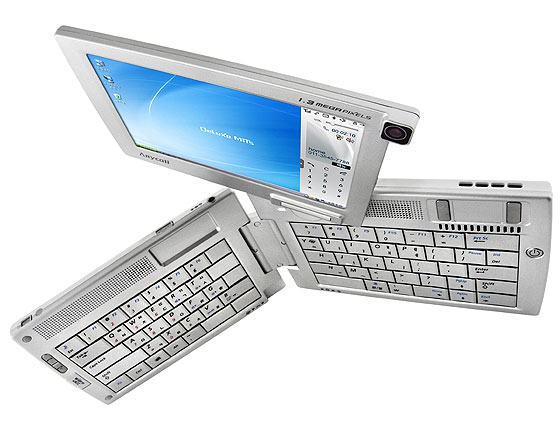
The transformer is SAMSUNG SPH-P9000 Deluxe MITs Mobile Convergence Device. It is a PDA sized device that is a cell phone, MP3 player, movie player, and digital 1.3 Megapixel camera. The CPU is a 1 GHZ Transmeta.

The P9000 also has a mini USB connector, Bluetooth with BT Messenger, 30 GB hard drive and a QWERTY keyboard for use with digits other than thumbs. Connects to the grid via CDMA EV-DO, WiMAX, and WiBRO. Agreed, it is not a real thin client, but a hand held computer running Windows XP, which has the RDP client.

Similarly, do not believe everything you see as with the pizza box pictured above. The pizza box is not just a pizza box, but a very high tech laptop anti-theft device. Visit HumanBean dot Net for more details and flash demonstration of this almost revolutionary product.


Chip PC Technologies has also abandoned the pizza box for a form factor about the size of a sardine can. The Jack PC (pictured right) fits into a wall electrical box. Has what you need for a thin client and more. Screen resolution up to 1600 x 1200. Four USB ports and audio. And PoE (Power over Ethernet) means it consumes a low level of energy compared to other thin client devices.


Chip PC also has EX thin clients (pictured left) in a miniature form factor that offer serial and parallel ports to connect to printers, scanners and other devices and includes support for a touch-screen controller. Chip PC posts that EX line consumes just 3.5 watts in full operational mode.


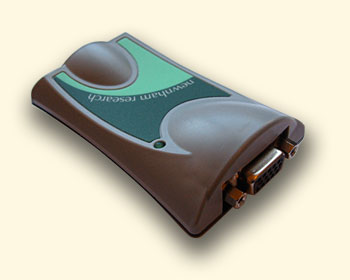
Ndiyo is developing "The Ethernet Nivo". Nivo is an acronym for Network In Video Out. The form factor is about 12x8x2cm. Ndiyo is targeting "
plug-and-play clustering of Ndiyo servers, support for session virtualisation, (and) the Hubster concept." The Hubster is pictured left.

Ndiyo is thinking outside of the pizza box. The "Hubster" is a USB based thin client device. This concept is to compliment their Ethernet Nivo thin client. Click on the Hubster link above to view the whole story.

For the curious, Ndiyo, is pronounced 'nn-dee-yo', and is Swahili for "yes". Ndiyo is a "not for profit" organization based in Cambridge, UK.


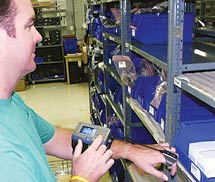
LXE is offering the HX2 that is "wearable, hands free and voice ready".

"A common component of all of LXE's hands-free, wearable and voice-ready computers is LXE's ToughTalk™ technology. LXE's ToughTalk technology is a specialized combination of LXE's trademark ruggedized system design, advanced audio circuitry and noise canceling techniques which enable a LXE voice computer to support today's industrial-grade, voice logistics applications. Don't assume there is just one style of voice terminal that you can use with your voice logistics application. With LXE's line of dedicated or multi-use, open system, voice computers; you do have a choice of rugged voice-ready terminals for your voice logistics applications."


I have no problems with a pizza box form factor or the now prevalent book end style. Just happen to believe that a one size device does not fit all the possible uses for thin clients.

Until the next post,

Steve

07 November 2006

Thin Client Laptops for Server Based Computing

Last month I asked who would be the first main stream vendor to produce a thin client laptop. The very next day King Of Prussia based Devon IT announced a new product named “SafeBook”. Later in the month King Of Prussia based Neoware announced their product ”m100”. Just a little over 5 miles from one another and they both visualize the new market opportunity. Must be something in the water supply.


To be honest I forgot about MaxSpeeds MaxBook 820 that was introduced a few years ago. But wait a minute, Neoware acquired MaxSpeed. Either way, the King of the Thin Client Laptop space will be based in Pennsylvania for the foreseeable future.

Downloaded the specification for each product and placed them side by side. There are a few differences. Screen size, weight and the m100 has a modem. Both list Windows XPe as an operating system and the m100 has Linux as an option. The SafeBook has listed the CPU as VIA C7-M at 1.5G. The m100 listed the VIA Eden as the CPU but did not specify a speed or which core architecture (Esther, Nehemiah, Samuel 2) is being used.

The SafeBook (pictured right) has the ability to carry more memory and a PCMCIA type 11 slot. Both can attach to an external monitor. Optional battery life for m100 is listed at the six hours. List prices are at the 800 USD level.

Both companies sight SECURITY as a major feature. Asked a friend that is an IT consultant for the public sector what he thought about the idea of a Thin Client Laptop. Response after a review of the products, “Love it!” I think the time is right.

Who is to become the Thin Client Laptop King of Prussia? Let the competition begin. I suspect that Server Based Computing will become the real beneficiary.

Until the next post,

Steve

29 October 2006

"Freemium", Server Based Computing, and “TANSTAAFL”

TANSTAAFL is the acronym for "there ain't no such thing as a free lunch." A book by the same name was included on the mandatory reading list for my Economics 101 class. “Freemium” is the concatenation of “Free” and “Premium”. The basic service is free with extensions, add ons or ancillary products available with a “Premium” fee. “Freemium” as an economic concept does not break new ground. Someone is going to pay.

The good news is sometimes that someone will be someone else. If all you need is what the service/product provider is offering for free, then FREE is good. Googles' word processor and spreadsheet is an example. They have a minimum tool set, but for some users these applications meet all of their requirements. For others, maybe not all of their requirements are meet, but with a price of “Free”, the applications are good enough!

So who pays? Those that want more than what is offered for free. The threshold for willingness to pay for additional products/services is lower for premium add ons in this model because the basic product/service is known to work as “Free”. How many of us have paid “Premium” for a product that did not, when delivered, provide even the basics that it advertised?

Adobe Reader may be another example. The reader is free, but the writer/creator application is available for a fee. The web site counter, Active Meter, at the bottom of the left column in this blog is free. Works good and is all I need. If I need more, the company can provide additional services.

There is also another side to “Freemium” that I have not seen mentioned. “Freemium” denies revenue to other enterprises that charge for a similar service or product. Revenue and its cousin “Profit” are the agents that sustain and grow an enterprise. Reduced revenue to the enterprise will eventually translate to into a reduced ability to sustain currently operating procedures. Denied revenue for a product/service that was heretofore a source of fuel to drive the enterprises, they must adapt to remain competitive.

Server Based Computing has the equivalent of Google Docs and Adobe Reader with Edubuntu 6.10. Edubuntu is the education product member of Canonicals' suite including Ubuntu, Kubuntu, Xubuntu, and Edubuntu.

Downloaded the latest release Edubuntu 6.10 (install version) to see just how far the product has come over the past year. Without additional configuration other then the basic install, “it just worked”! After the installation was complete, I pressed the start button on my thin client (Devon IT NTA 6020A) and it PXE booted into the Edubuntu Server. Just to make sure it was really this easy I went over to the server and launched the Student Control Panel. There I was, listed as a student with my session “Curriculum Vitae”. Could not resist sending myself a message to the student session “hello brave new world”. And not a command line in sight.

Until the next post

Steve

13 October 2006

Could successful software anti piracy campaigns in China and India spawn new Server Based Computing development?

An AP wire service article posted on Wired.com gave me pause to ponder.


Piracy Zaps China's Tech Industry

Associated Press 10:15 AM Jul, 02, 2006

BEIJING -- Kingsoft Corporation's English-Chinese dictionary program is used on most of China's 60 million PCs. That's the good news. The bad news: Kingsoft doesn't make any money from it, because 90 percent of those copies are pirated.


One by one, the Beijing-based software maker has seen its sales of such popular products destroyed after black market producers flooded the market with cheap copies.

Today, Kingsoft's 600 programmers focus on making what it hopes can't be copied -- online games and business and anti-virus programs that have to be linked to its own computers in order to function.

"Piracy has had a big impact on us, making it so we can't get powerful and compete with Microsoft," said Ren Jian, a former Microsoft manager who is Kingsoft's chief operating officer.
India is also recognizing the constraints on software development imposed by piracy. The Times of India reports;

“Piracy eating into profits of IT firms”

by Sujata Dutta Sachdeva [ 1 Oct, 2006 0006 hrs ]


NEW DELHI: India's IT success makes great copy. Especially when it's about big players and the global footprints they have left behind.

But behind this happy picture lingers a dark side too. It involves small and medium companies, especially in the product development space. These firms are losing revenue because of piracy and weak enforcement of copyright laws in India.....

A recent study by Business Software Alliance (BSA)-IDC reveals piracy is as high as 72% in India. In fact, our software industry is losing around $566 m because of it. It's a growing problem among businesses internationally, but the good news is that it's coming down steadily in India over the last 10 years.
One perspective is that Linux on the desktop may be a viable solution. Posted on Byte.com;

China's Linux Gamble

By Maria Trombly
September 5, 2005

On virtually any street in Shanghai or Beijing, you can buy a Hollywood DVD or hot new CD for $1 or less. Vendors peddle Microsoft Office, Windows XP, and every other popular software applications out of cardboard boxes jammed full of discs....

According to Jones Day intellectual property rights lawyer Xiang Wang, the Chinese case law on many aspects of intellectual property rights is not yet well developed, and cases can take years to settle. The Business Software Alliance a trade group including software giants such as Microsoft, Apple, and IBM alleges that 90 percent of all software used in China is pirated and that software vendors suffered $3.5 billion in losses last year due to Chinese piracy.

The Chinese government has started to realize that this is an obstacle to economic development. And if anybody pays attention to economic development these days, it's China. Now, China is beginning to look at open source software as a way out of the intellectual property quagmire that doesn't involve paying high costs.

Linux is a keystone in this strategy.
The AP reports;
President Hu Jintao called attention to piracy's cost to China in a May 27 speech to Communist Party officials. Enforcement "is an urgent need for ... enhancing the country's core competitiveness," Hu said.

"We should strengthen our law enforcement and lawfully and severely crack down on and effectively curb law-breaking and criminal acts of violating intellectual property rights," he said.

- - - - - - - - - - - - - - - - - - - - - - - - - - - - - - - - - - - - - - - - - - - - -
October 20, 2005 Update Headline

MSNBC.MSN.COM has posted an Asscociated Press report;
China jails 9 in anti-piracy crackdown
Prison terms up to 13 years, fines for illegal movies, software
Updated: 7:56 a.m. ET Oct 20, 2006

BEIJING - Nine people convicted of selling illegally copied DVDs and other goods have been jailed for up to 13 years in China's biggest anti-piracy crackdown to date, a news report said Friday.

The sentences were the longest reported since China stepped up penalties for product piracy in mid-2005, imposing jail time in addition to fines that Washington and other governments had complained were inadequate to stop the thriving underground industry.

End of Headline Update
- - - - - - - - - - - - - - - - - - - - - - - - - - - - - - - - - - - - - - - - - - - -


Lets assume that China, the number two PC market in the would, ships its' personal computer products with a legal copy of an operating system. Good. But what about applications?

Kingsoft, the software maker, aspired to be the "Microsoft of China," but was forced by piracy to stop selling games, a media player and other mass-market programs. Ren, the COO, says the consumer logic is simple: A pirated copy of Kingsoft's Chinese-English dictionary costs one-tenth the $12 price of the real thing.

The onslaught has forced Kingsoft to narrow its product range, with two-thirds of its programmers now working on online role-playing games that players access on Kingsoft's computers for a monthly fee -- part of a thriving Chinese market for online games.


“Necessity is the Mother of Invention” quote has been attributed to Plato, De Vinci, Shakespeare and others. My favorite interpretation is “ Got lemons? Make lemonade!” As captain of your enterprise, do not sail into a nations waters known to have pirates unless the “IPR” (Intellectual Property Rights) coast guard is at sea on patrol. No Coast guard? Then take a land route. In this case Free Open Source Software (FOSS) or one of Server Based Computing offerings.

Microsoft has already in place SAAS (Software As A Service) with SPLA (Service Provider License Agreement).

The Service Provider License Agreement (SPLA) enables service providers and ISVs with a hosted offering to license Microsoft products on a monthly basis to provide services and hosted applications to their end customers.

The personal computer has permitted the owner/operator to specify what applications are hosted on their machines. Before the Internet this was an uncomplicated procedure. What was on that machine had to be placed there by someone with direct access to that machine. With the Internet/Intranet that is no longer the case.

Organizations now have software distribution systems that will load software on a PC based on group membership. Enterprises that have a total commitment to respect IPR have teams that their primary role is to keep the organization with the limits of the law.

Knowledgeable individuals are forced to buy and install software whose sole purpose is to keep everyone else from loading software on to their personal computer. Your personal computer is no longer your personal computer if it connected to the Internet. Security is now a major concern for both the individual and organizations.

In the past, organizations have recognized that a combination of SBC hosted applications and local applications represent an effective compromise. Some enterprises, upon review, have concluded that increased use of Server Based Computing has additional merit. And it is not based solely on TCO, but includes security and the ability to rapidly deploy changing IT services to attain a competitive advantage. That review has not been done by most PC centric organizations and individuals. SBC has not reached out to the SME and individuals with quality information that invokes a review of their PC utilization.

Perhaps China and India, influenced by current conditions, can create a Server Based Computing environment for the retail consumer that is safe from pirates on the street and those pirates that roam the Internet.

Until the next post,

Steve